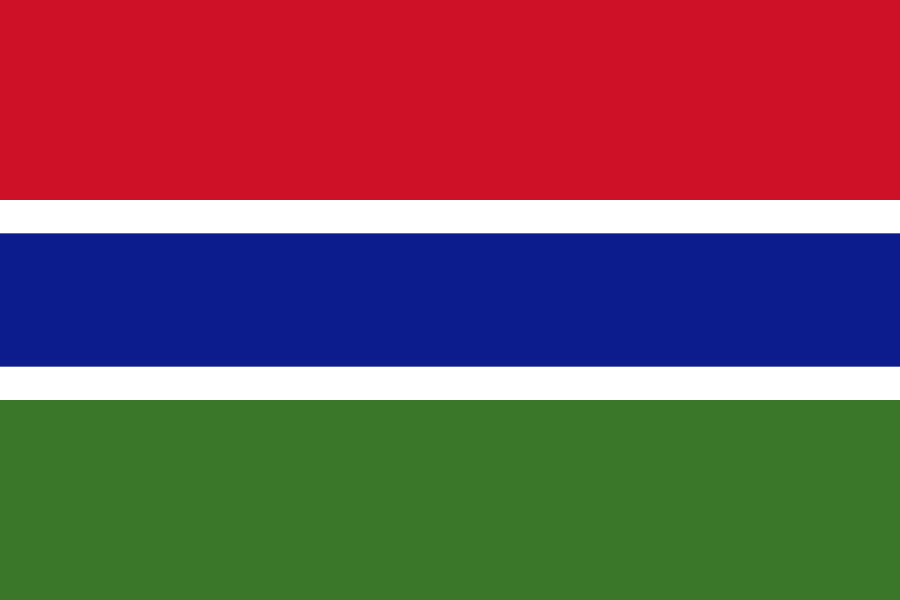
Gambia
History
The Gambia, officially the Republic of the Gambia, is a country in West Africa. Geographically, the Gambia is the smallest country in continental Africa; it is surrounded by Senegal on all sides except for the western part, which is bordered by the Atlantic Ocean. Its territory is on both sides of the lower reaches of the Gambia River, which flows through the center of the country and empties into the Atlantic. The national namesake river demarcates the elongated shape of the country, which has an area of 11,300 square kilometres (4,400 sq mi) and a population of 2,422,712 people at the 1 May 2024 Census which is a 30.45% population increase from 2013. The capital city is the island Banjul, formerly called Bathurst during the colonial era, which is the most extensive metropolitan area in the country. The second- and third-largest cities are Serekunda and Brikama. Other significant cities are Kanifing and Farafenni in the north bank, Basse in Upper River Region, and Soma in lower river region. Arab Muslim merchants traded with indigenous West Africans in the Gambia, under an arrangement known as the trans-Saharan trade, using a barter exchange system. Throughout the 9th and 10th centuries... Summary adapted from the English Wikipedia (CC BY-SA 4.0). The live article includes citations, maps, and updates.