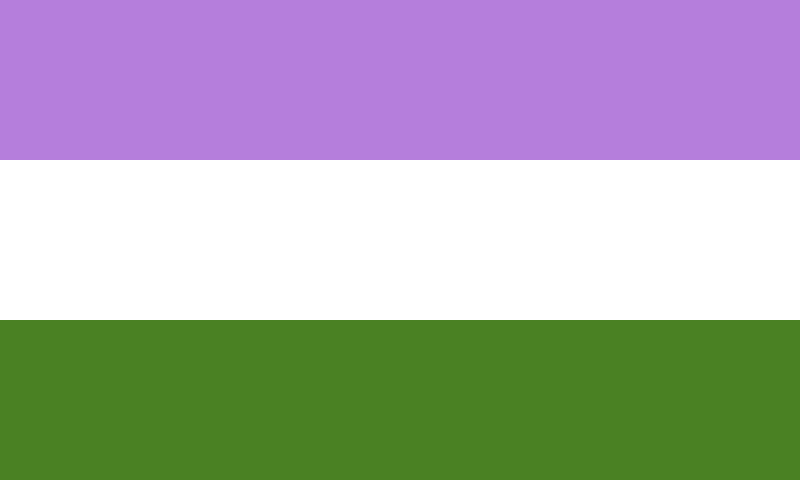
Genderqueer Pride Flag
History
Marilyn Roxie designed the Genderqueer Pride Flag in 2011, publishing it on their blog with documentation of the design rationale. Roxie created it to give visual identity to the growing genderqueer community online, which at the time was largely organising through LiveJournal and early Tumblr. The flag preceded the non-binary flag by three years and influenced many subsequent gender-identity flag designs. It remains in use by people who specifically identify with the term 'genderqueer' rather than the broader 'non-binary.'
Colors
lavender, white, dark chartreuse green
Lavender, a blend of pink and blue, represents androgyny and queer gender; white represents agender identity; dark chartreuse green (the inverse of lavender on the colour wheel) represents gender outside the binary.
Symbols
three horizontal stripes
The colour-wheel relationship between lavender and green grounds the design in a visual logic of opposition and complementarity.

