Liechtenstein
History
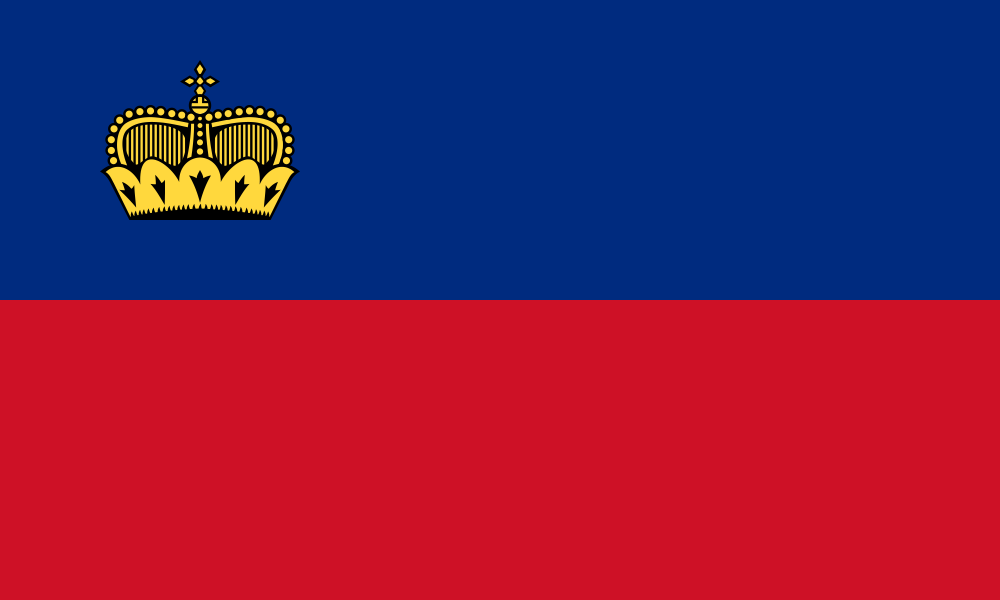
Liechtenstein (, LIK-tən-styne; pronounced [ˈlɪçtn̩ʃtaɪn] ; Alemannic German: Liachtaschta), officially the Principality of Liechtenstein (German: Fürstentum Liechtenstein [ˈfʏʁstn̩tuːm ˈlɪçtn̩ʃtaɪn] ), is a doubly landlocked country in the Central European Alps. It is located between Austria to the east and north-east and Switzerland to the north-west, west and south. Formed in 1719, Liechtenstein became fully independent upon the dissolution of the German Confederation in 1866. Liechtenstein is a monarchy headed by the prince of Liechtenstein. Hans-Adam II, Prince of Liechtenstein has reigned over Liechtenstein since 1989. Liechtenstein is Europe's fourth-smallest country, with an area of just over 160 square kilometres (62 square miles) and a population of 41,389. It is the world's smallest country to border two countries, and is one of the few countries with no debt. The official language of Liechtenstein is German. Liechtenstein is divided into 11 municipalities. Its capital is Vaduz, and its largest municipality is Schaan. It is a member of the United Nations, the European Free Trade Association, and the Council of Europe. It is not a member state of the European Union, but it... Summary adapted from the English Wikipedia (CC BY-SA 4.0). The live article includes citations, maps, and updates.