New Zealand
History
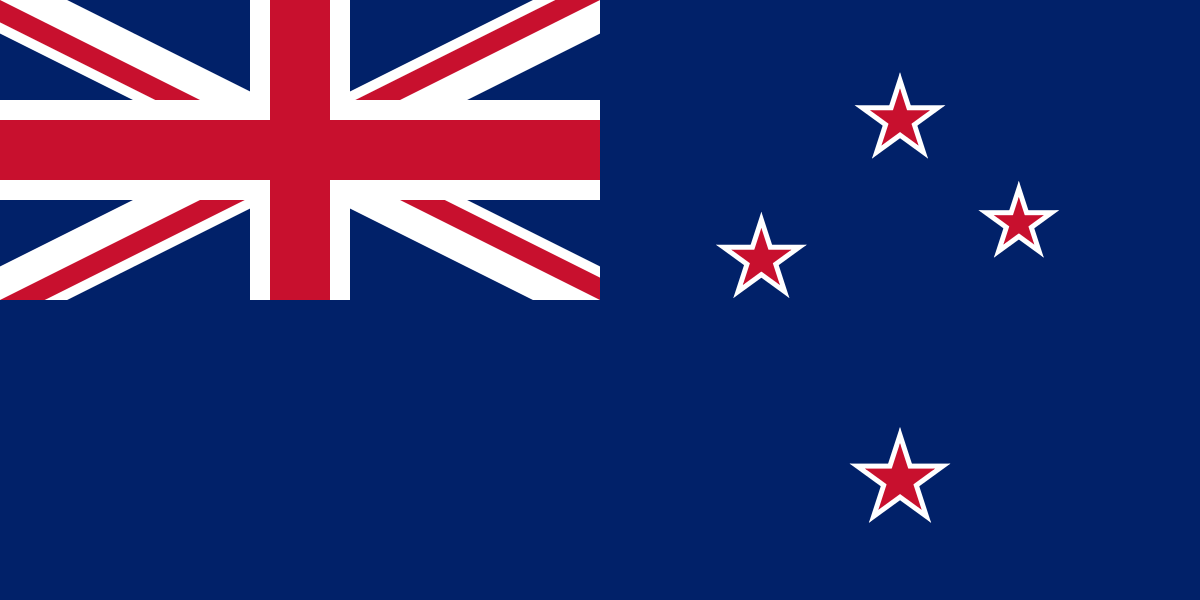
New Zealand is an island country in the southwestern Pacific Ocean. It consists of two main landmassesāthe North Island (Te Ika-a-MÄui) and the South Island (Te Waipounamu)āand over 600 smaller islands. It is the sixth-largest island country by area and lies east of Australia across the Tasman Sea and south of the islands of New Caledonia, Fiji, and Tonga. The country's varied topography and sharp mountain peaks, including the Southern Alps (KÄ Tiritiri o te Moana), owe much to tectonic uplift and volcanic eruptions. New Zealand's capital city is Wellington, and its most populous city is Auckland. The islands of New Zealand were the last large habitable land to be settled by humans. Between about 1280 and 1350, Polynesians began to settle in the islands and subsequently developed a distinctive MÄori culture. In 1642, the Dutch explorer Abel Tasman became the first European to sight and record New Zealand. In 1769 the British explorer Captain James Cook became the first European to set foot on and map New Zealand. In 1840, representatives of the United Kingdom and MÄori chiefs signed the Treaty of Waitangi, which paved the way for Britain's declaration of sovereignty later that year... Summary adapted from the English Wikipedia (CC BY-SA 4.0). The live article includes citations, maps, and updates.