Rainbow Pride Flag
History
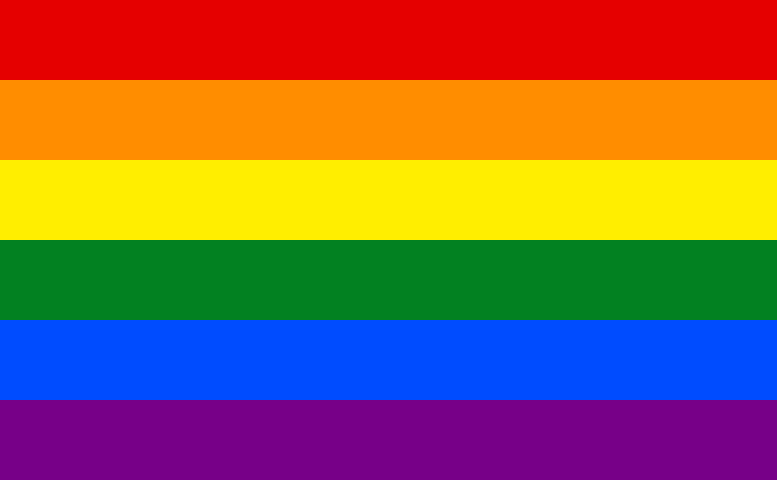
Gilbert Baker, a San Francisco artist and gay activist, created the original eight-stripe rainbow flag in 1978 at the request of Harvey Milk. Baker and a team of volunteers hand-dyed and sewed the first flags for the San Francisco Gay Freedom Day Parade. Two stripes — hot pink and turquoise — were dropped in 1979 because hot-pink fabric was scarce and a six-stripe version printed more efficiently at scale. The simplified six-stripe flag spread worldwide during the 1980s AIDS crisis as a visible counter-symbol of mourning. By the 1990s it had become the dominant symbol of LGBTQ+ identity globally, adopted by advocacy organisations, governments, and businesses. Baker died in 2017; his design is now considered one of the most recognised flags on earth. The flag has no single official body controlling it, which Baker always intended — he wanted it to be freely used and adapted.
Colors
red, orange, yellow, green, blue, violet
Gilbert Baker assigned each stripe a meaning: red = life, orange = healing, yellow = sunlight, green = nature, blue = harmony, violet = spirit.
Symbols
rainbow
The arc shape evokes natural beauty and a spectrum of diversity unified into one identity.