In use: 2018 – present
Progress Pride Flag
History
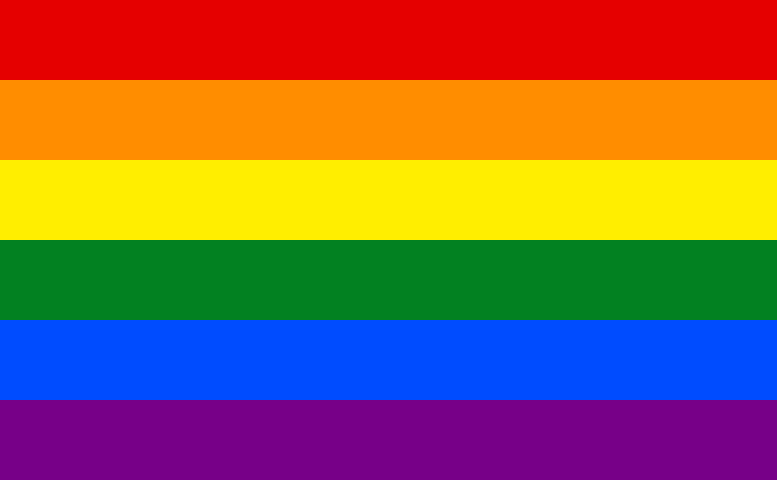
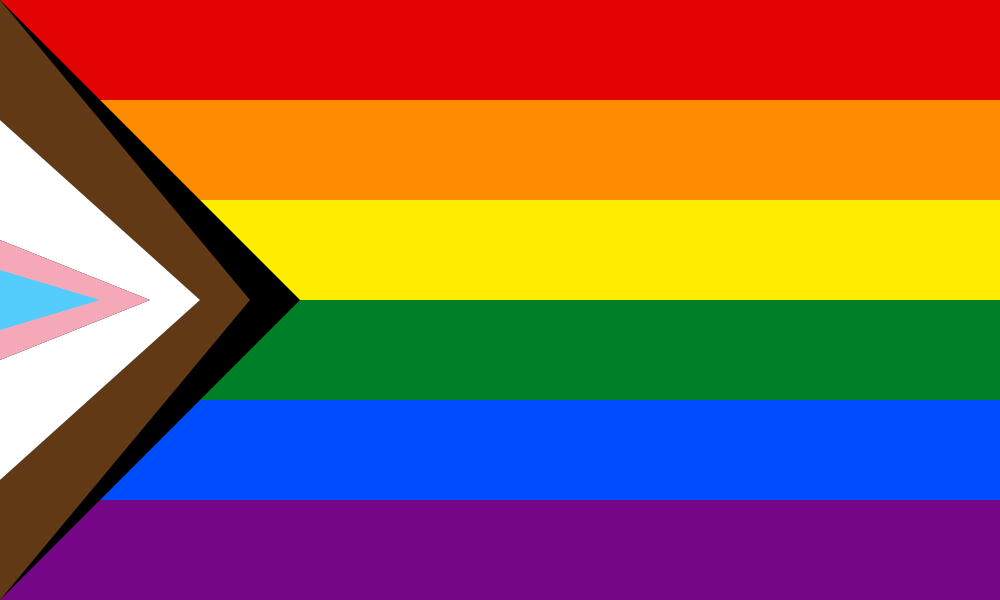
The Progress Pride Flag represents an attempt to acknowledge that the original rainbow flag, while universal in aspiration, has not always felt equally welcoming to all members of the LGBTQ+ community. Its direct predecessor was the Philadelphia People of Color Inclusive Flag, created in 2017 by the design firm Tierney for Philadelphia's Office of LGBT Affairs. That flag added a brown stripe and a black stripe to the rainbow — the brown representing people of colour, the black representing Black LGBTQ+ people as well as those lost to HIV/AIDS — but it was criticised for simply adding stripes rather than creating a design that conveyed movement and progress. Daniel Quasar, a nonbinary American graphic designer, addressed this in 2018 by creating the Progress Pride Flag, which retained the six-stripe rainbow but replaced the left edge with a forward-pointing chevron incorporating the transgender flag colours (white, pink, and light blue) and the Philadelphia flag's brown and black stripes. The rightward-pointing chevron was explicitly designed to represent forward movement and the work still to be done. Quasar released the design under a Creative Commons licence and began selling prints to fund their work. In 2021, Intersex Human Rights Australia's Valentino Vecchietti created the Intersex-Inclusive Progress Pride Flag by adding a yellow triangle with a purple circle to the chevron, representing intersex people. The progression of designs — each generation adding previously marginalised groups — has itself become a form of political argument about inclusion within the LGBTQ+ movement.
Colors
Red, Orange, Yellow, Green, Blue, Violet, White, Pink, Light Blue, Brown, Black
The original six rainbow stripes are joined by a chevron representing trans people (white, pink, light blue), people of colour (brown and black), and those living with HIV/AIDS.
Symbols
Rainbow stripes with a forward-pointing chevron
The chevron points forward to represent progress; the additional colours centre communities historically marginalised even within the LGBTQ+ movement.