In use: 1999 – present
Transgender Pride Flag
History
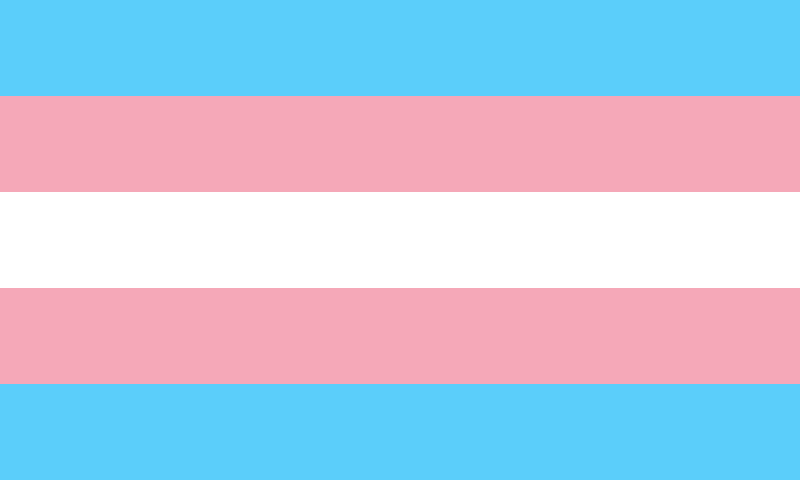
The Transgender Pride Flag was created by Monica Helms, a transgender woman and US Navy veteran, in 1999. Helms had been thinking about the absence of a specifically transgender symbol distinct from the broader rainbow flag when she met Michael Page — creator of the bisexual pride flag — at a Pride event in Phoenix, Arizona. Page encouraged her to create a design. Helms settled on five horizontal stripes: light blue (the traditional Western colour for baby boys), pink (the traditional colour for baby girls), white (representing those who are transitioning, those who identify as non-binary, and those who are intersex), pink again, and light blue again. A crucial feature Helms built into the design: the flag is correct no matter which way it is flown, because the pattern is a palindrome — a rare vexillological property she described as reflecting how transgender people find peace and consistency wherever they are. The flag was first flown publicly at the 2000 Phoenix Pride parade. Helms carried it in parades for years before its use spread globally. In 2014, she donated the original flag to the Smithsonian Institution's National Museum of American History, where it is preserved alongside other landmarks of American social history. The transgender flag has since become one of the most widely recognised pride flags in the world and frequently appears alongside the rainbow flag as a paired symbol of LGBTQ+ visibility and rights.
Colors
Light Blue, Pink, White
Light blue is the traditional colour for baby boys; pink for baby girls; white represents those who are transitioning, non-binary, or intersex.
Symbols
Five horizontal stripes — light blue, pink, white, pink, light blue