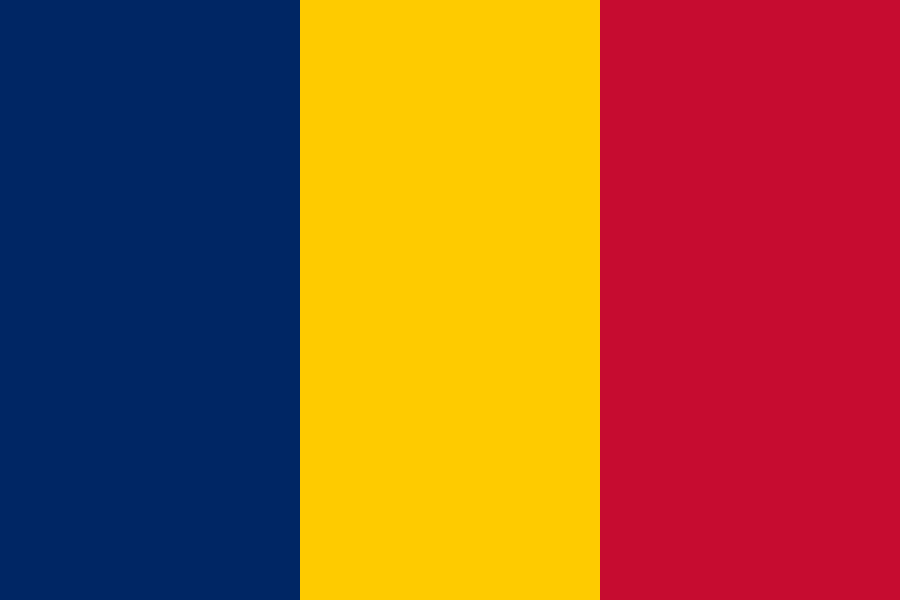
Chad
History
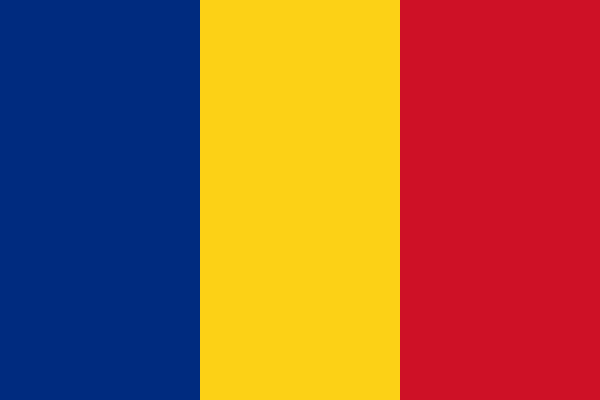
Chad, officially the Republic of Chad, is a landlocked country in Central Africa. It is bordered by Libya to the north, Sudan to the east, the Central African Republic to the south, Cameroon to the southwest, Nigeria to the southwest (at Lake Chad), and Niger to the west. Chad has a population of 19 million, of which 1.6 million live in the capital and largest city of N'Djamena. With a total area of around 1,300,000 km2 (500,000 sq mi), Chad is the fifth-largest country in Africa and the twentieth largest nation by area. Chad has several regions: the Sahara desert in the north, an arid zone in the centre known as the Sahel, and a more fertile Sudanian Savanna zone in the south. Lake Chad, after which the country is named, is the second-largest wetland in Africa. Chad's official languages are Arabic and French with most education and state documents being in French. It is home to over 200 ethnic and linguistic groups. Islam (55.1%) and Christianity (41.1%) are the main religions practiced in Chad. Beginning in the 7th millennium BC, human populations moved into the Chadian basin in great numbers. By the end of the 1st millennium AD, a series of states and empires had risen and fallen... Summary adapted from the English Wikipedia (CC BY-SA 4.0). The live article includes citations, maps, and updates.