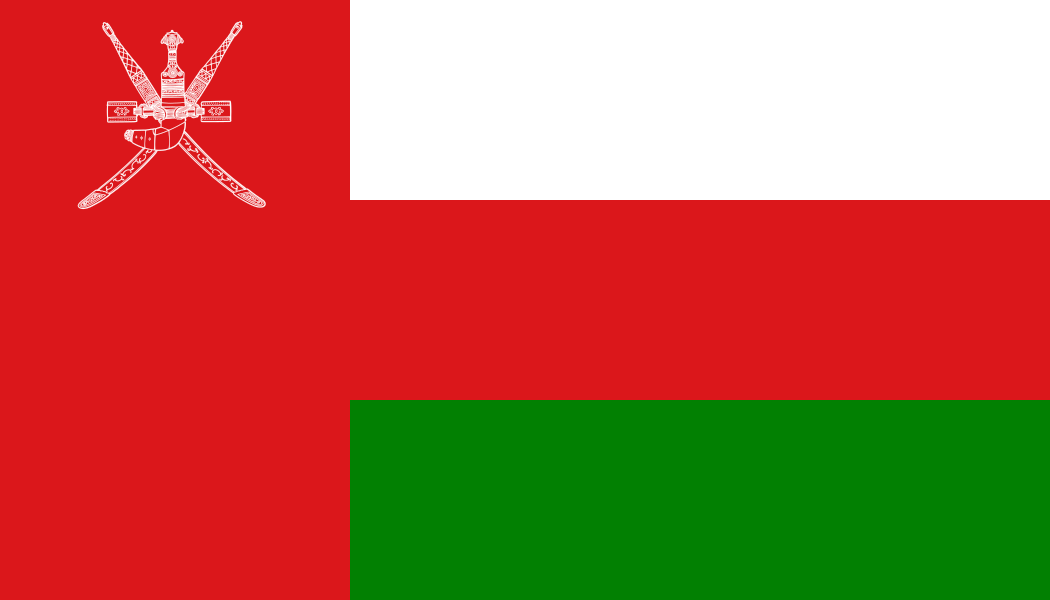
Oman
History
Oman, officially the Sultanate of Oman, is a country in the southeastern Arabian Peninsula in West Asia. It shares land borders with Saudi Arabia, the United Arab Emirates, and Yemen. Oman's coastline faces the Arabian Sea to the southeast and the Gulf of Oman on the northeast. The exclaves of Madha and Musandam are surrounded by the United Arab Emirates on their land borders, while Musandam's coastal boundaries are formed by the Strait of Hormuz and the Gulf of Oman. It has a population of approximately 5.46 million and an area of 315,331 km2 (121,750 sq mi). Muscat is the capital and largest city. Oman is the oldest independent state in the Arab world, and has been continuously ruled by the Al Bu Said dynasty since 1744. Beginning in the 17th century, Oman became a regional power with an empire that competed with the Portuguese Empire and British Empire for influence in the Persian Gulf and the Indian Ocean. At its peak in the 19th century, Omani influence and control extended across the Strait of Hormuz to what later became Iran and Pakistan, and as far south as Zanzibar. In the 20th century, Oman came under the influence of the British Empire while de jure remaining sovereign. Oman... Summary adapted from the English Wikipedia (CC BY-SA 4.0). The live article includes citations, maps, and updates.