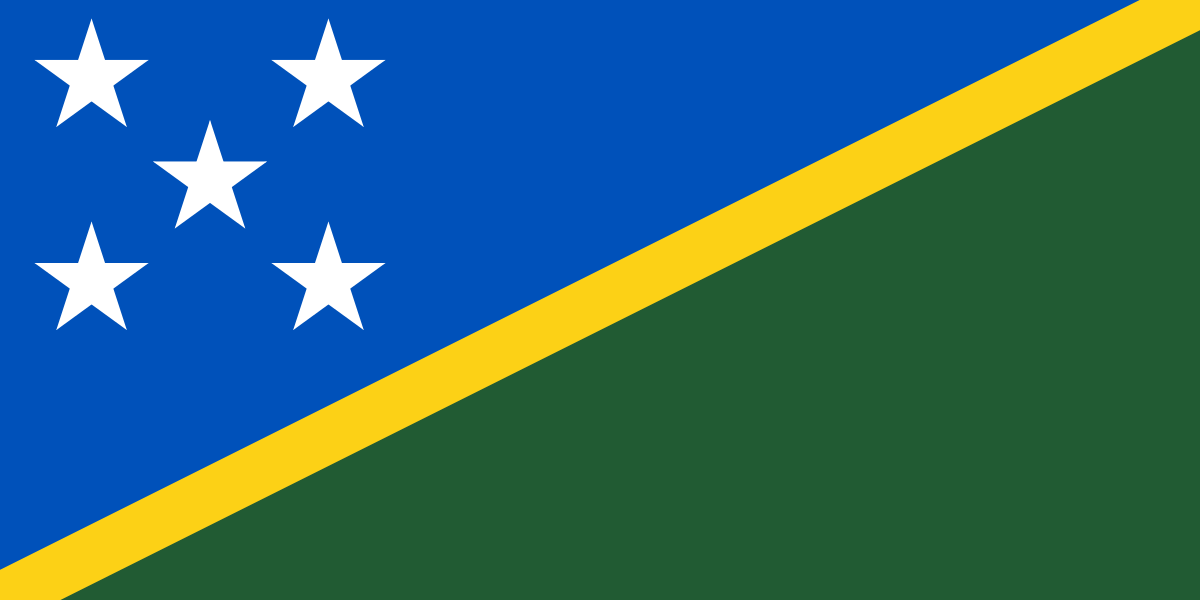
Solomon Islands
History
Solomon Islands, also known simply as the Solomons, is an archipelagic country consisting of six major islands and over 1,000 smaller islands in Melanesia, Oceania, to the north-east of Australia. It is adjacent to Bougainville to the west, New Caledonia and Vanuatu to the south-east, Fiji, Tuvalu, and Wallis and Futuna to the east, and the Federated States of Micronesia and Nauru to the north. It has a total area of 28,896 square kilometres (11,157 sq mi), and a population of 828,857 according to the official estimates from 2025. Its capital and largest city, Honiara, is located on the largest island, Guadalcanal. The country takes its name from the wider area of the Solomon Islands archipelago, which is a collection of Melanesian islands that also includes the Autonomous Region of Bougainville (currently a part of Papua New Guinea), but excludes the Santa Cruz Islands. The islands have been settled since at least some time between 30,000 and 28,800 BC, with later waves of migrants, notably the Lapita people, mixing and producing the modern indigenous Solomon Islanders population. In 1568, the Spanish navigator Ćlvaro de MendaƱa was the first European to visit them. Though not named... Summary adapted from the English Wikipedia (CC BY-SA 4.0). The live article includes citations, maps, and updates.